By Dr. Pratibha Tripathi · Senior Ayurveda Consultant, PhD Scholar & Assistant Professor
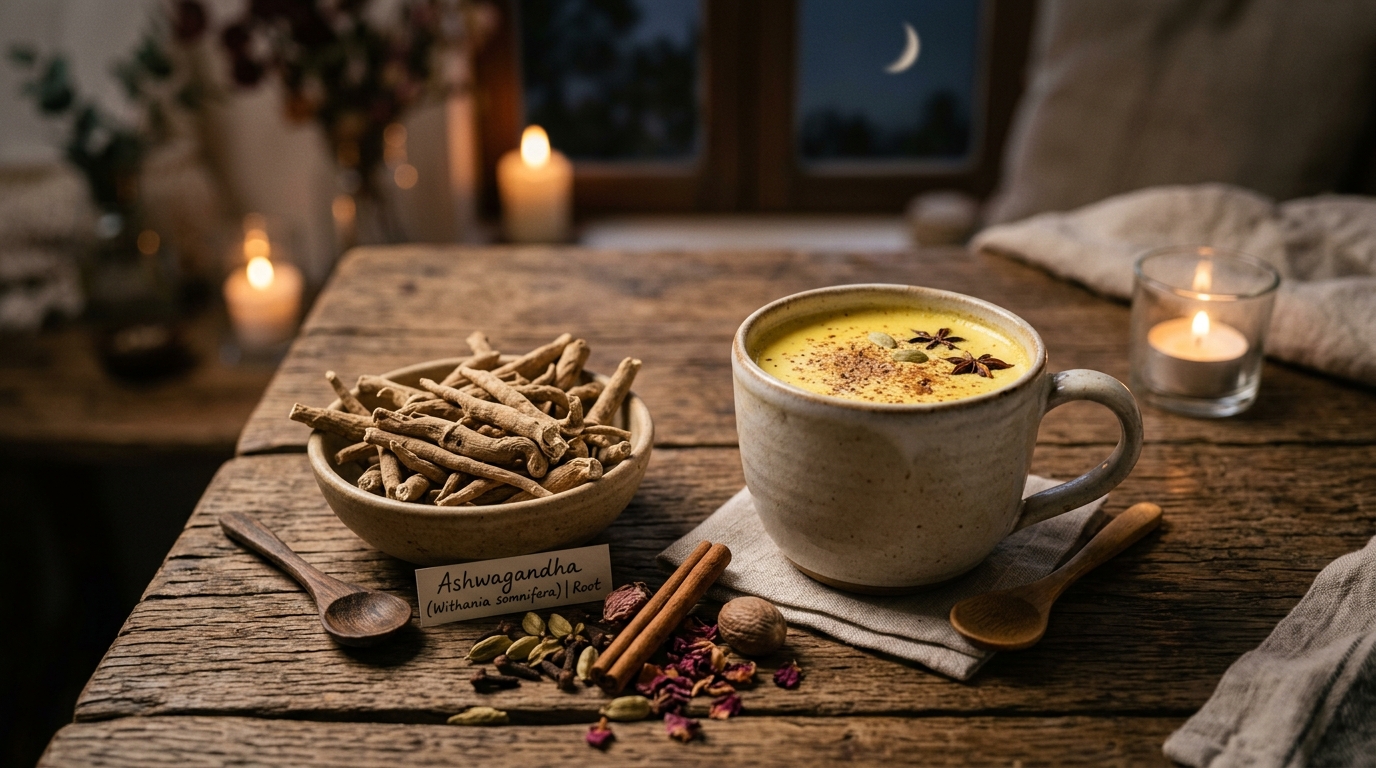
The Midnight Dilemma: "Wired but Tired"
Do you drag yourself through the workday feeling exhausted, foggy-headed, and desperate for sleep—only to experience a sudden surge of mental restlessness the moment your head hits the pillow at 11:30 PM?
If you feel "wired but tired," you are certainly not alone. In modern clinical practice, this is one of the most widespread complaints among busy professionals, parents, and students.
Why Your Brain Turns into a Busy Highway at Night
Under healthy physiological conditions, your master hormone of alertness—cortisol—follows a circadian rhythm:
- Morning (6:00 AM – 8:00 AM): Cortisol peaks to give you natural vitality, wakefulness, and drive.
- Evening (8:00 PM – 10:00 PM): Cortisol steadily declines, allowing your pineal gland to secrete melatonin, the hormone that signals cellular repair and deep sleep.
However, prolonged psychological stress, late-night screen exposure (blue light), irregular meal times, and constant digital notifications dysregulate the Hypothalamic-Pituitary-Adrenal (HPA) axis.
Instead of tapering off, cortisol surges abnormally late at night. Your physiology is tricked into an artificial "fight-or-flight" emergency state. Even though your body feels thoroughly drained, your central nervous system remains on high alert.
The Ayurvedic Perspective: The Circadian Dosha Shift
In classical Ayurveda, time is governed by the natural elemental cycles known as Dinacharya:
"Nidrayattam Sukham Dukham Pushtih Karshyam Balabalam..."
"Happiness, misery, nourishment, emaciation, strength, weakness, virility, and even life itself depend upon proper, restorative sleep."
— Charaka Samhita, Sutrasthana 21:36
The 10:00 PM Threshold
1. Kapha Period (6:00 PM – 10:00 PM): Earth and water elements dominate. The body naturally produces heaviness, lethargy, and relaxation. This is the optimal window to transition into sleep. 2. Pitta Period (10:00 PM – 2:00 AM): Fire and water elements take over. This period is biologically designed for internal metabolic renewal, cellular detoxification by the liver, and emotional digestion.
If you push past 10:00 PM without winding down, you activate your "second wind." Sadhaka Pitta (the sub-dosha responsible for processing intellect and memories) and unsettled Prana Vata (the mental principle of movement and speed) begin firing uncontrollably, transforming your quiet bedroom into a fast-paced intellectual traffic jam.
Meet Ashwagandha (Withania somnifera): The Neuro-Endocrine Stabilizer
In Ayurvedic pharmacology, Ashwagandha holds an esteemed place as a premier Medhya Rasayana (cognitive and neurological rejuvenator) and Balya (promoter of core vitality).
Its botanical name, somnifera, literally translates from Latin as "sleep-inducing."
How Ashwagandha Targets the Root Cause:
- Modulates the HPA Axis & Lowers Cortisol: Clinical double-blind trials demonstrate that standardized Ashwagandha extract significantly decreases serum cortisol levels by up to 28–30% in chronically stressed adults.
- GABA-Mimetic Calming Effect: The active bioactive withanolides bind gently to GABAergic neuro-receptors in the brain, dampening excessive excitatory neurotransmission without producing sluggishness or addiction.
- Restores Non-REM Deep Sleep Architecture: Unlike synthetic sleep aids that induce artificial sedation while disrupting REM phases, Ashwagandha preserves natural sleep cycles, allowing you to wake up feeling genuinely recharged.
Dr. Pratibha’s Restorative Nighttime Elixir (Moon Milk)
In Ayurvedic medicine, herbs are traditionally delivered with specific carriers (Anupana) to guide their bioactives deep into the target tissue (Majja Dhatu / nervous system).
Ingredients:
- 1 cup: Warm organic whole milk (or unsweetened almond / oat milk for plant-based option)
- 1/2 tsp: Pure, organic Ashwagandha root powder (Churna)
- 1/4 tsp: Crushed green cardamom seeds (Elaichi – supports enzymatic absorption and balances digestive heat)
- 1 pinch: Freshly grated Nutmeg (Jaiphal – a classical Ayurvedic sedative for overactive thinking)
- 1/2 tsp: Pure A2 Cow’s Ghee (nourishes Ojas, the subtle essence of vitality and immunity)
- Optional: 1/2 tsp raw honey (stirred in only after the beverage has cooled to lukewarm temperature)
Preparation:
1. Simmer the milk gently in a small pot on low heat. 2. Whisk in the Ashwagandha, cardamom, and nutmeg for 3 to 4 minutes. 3. Remove from heat, stir in the ghee, and pour into your favorite ceramic mug. 4. Sip mindfully 45 to 60 minutes before your planned bedtime.
3 Essential Evening Rituals (Nidra Chikitsa)
To maximize the therapeutic benefit of Ashwagandha, pair it with these grounding circadian habits:
1. Digital Sunset at 9:00 PM: Power down tablets, laptops, and smart TVs at least 60 minutes before sleep. If screen use is unavoidable, utilize strict blue-light blocking lenses. 2. Padabhyanga (Foot Massage): Massaging the soles of your feet with warm sesame oil or Brahmi taila for 5 minutes draws agitated Prana energy downwards away from an overheated brain. 3. Chandra Bhedana Pranayama: Close your right nostril with your thumb and inhale slowly through your left nostril; exhale through the right. Repeating this gentle breath for 5 minutes activates the cooling lunar (Ida) parasympathetic channel.
Clinical Safety & Practitioner Guidance
While Ashwagandha is exceptionally well-tolerated by most constitutions:
- Those with active hyperthyroid conditions or autoimmune flares should consult an Ayurvedic physician prior to therapeutic supplementation.
- Avoid taking Ashwagandha with heavy or chilled late-night meals.
- Consistency is paramount: adaptogenic herbs work cumulatively, building resilience over 3 to 6 weeks of daily practice.
Need Personalized Guidance for Sleep or Chronic Stress?
If insomnia, mid-cycle exhaustion, or anxiety has been persistent, addressing the unique root imbalance of your Prakriti (dosha constitution) is the fastest route to vibrant health.
Book a comprehensive clinical consultation with Dr. Pratibha Tripathi at our clinic or online via telemedicine.
📖 Original Clinical Publication:
Read the complete article with citations and practitioner notes on Dr. Pratibha's official website:
https://www.pratibhatripathi.com.np/blog/exhausted-all-day-but-your-brain-turns-into-a-busy-highway-at-midnight
🌿 Connect with Dr. Pratibha Tripathi Across Platforms:
- 🌐 Official Website & Appointments: www.pratibhatripathi.com.np
- 📘 Facebook Page: facebook.com/DrPratibhaTripathi
- 📸 Instagram: @dr.pratibhaayurveda
- 💼 LinkedIn: Dr. Pratibha Tripathi on LinkedIn
- ▶️ YouTube: AyurSanjeevini Yoga & Ayurveda
- 💬 WhatsApp Clinical Inquiries: +977-9849744828
Comments
Post a Comment